


Word Oasis: Calm Puzzle Game
4.962.00 Reviews
App Specs
- Version
- 1.14.2
- Updated On
- License
- Free
- Downloads
- 10,000+
- Developer
- Oasis Games, Ltd.
- Categories
- Word
- Platform
- Android
Screenshots
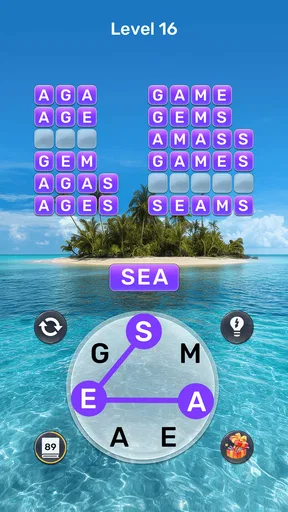
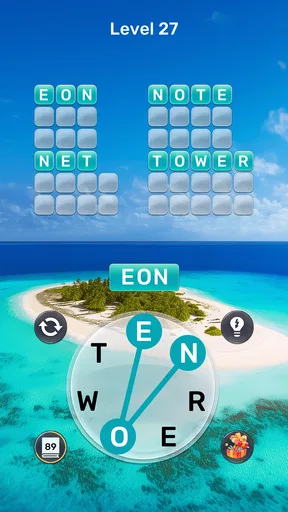
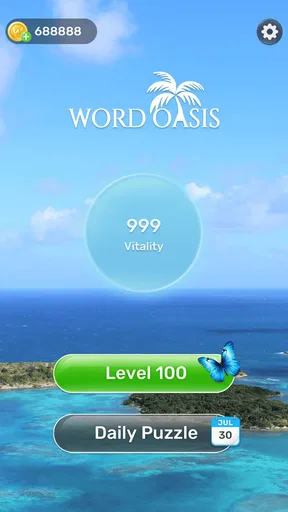
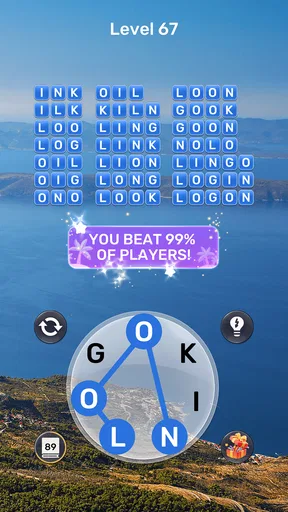

 Analysis by AppCompare
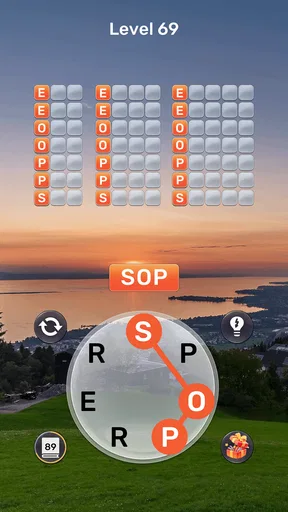
I went into Word Oasis expecting a simple word game for short breaks, and that is largely what I found: a quiet, low-pressure puzzle experience built around finding words rather than racing a clock or competing with other players. Its “calming” identity is important because it changes how I approached each round. I was not trying to clear a board as quickly as possible; I was taking a moment to look at the available letters, test possibilities, and enjoy the small satisfaction of spotting a word I had overlooked.
That makes this a particularly approachable choice for anyone who likes word puzzles but does not want an intense challenge every time they open a game. It is free to start, suitable for Everyone, and comes from Oasis Games, Ltd. The current release is version 1.14.2, and the game runs on Android 6.0 or later. Those details make it accessible to many older devices as well as newer phones, although the experience will still depend on the screen size and general condition of the handset.
How Word Oasis feels in everyday use
The best way I can describe the game is as a gentle word-search routine. I could imagine opening it while waiting for an appointment, winding down before bed, or taking a short break from work. The format does not demand the same commitment as a long strategy game, and it is easier to put down without feeling that I have abandoned a complicated mission.
That relaxed approach is also the main reason I would recommend it to certain players over more aggressive word-game alternatives. Many familiar titles push timed rounds, streaks, daily pressure, or competitive leaderboards. Those systems can be motivating, but they can also turn a vocabulary game into another source of tension. Word Oasis is better suited to someone who wants a calmer mental exercise and prefers to solve at their own pace.
I would not choose it for a player who needs deep strategic variety, a strong social layer, or a constant stream of dramatic progression. The appeal is narrower and more focused. The pleasure comes from the act of arranging language in your head, not from building a character, managing resources, or mastering a complicated ruleset.
A useful game for small pockets of time
One practical strength is how naturally it fits into fragmented time. I can play a little, stop, and return later without needing to remember a long sequence of events. That makes it more convenient than word games that require a full session or punish interruptions. If I were using it during a commute, I would still keep the device secure and avoid playing while walking, but the structure itself is well suited to waiting rooms and short pauses.
There is also a useful mental distinction between playing for relaxation and playing for improvement. If your goal is to expand vocabulary, the game can encourage you to notice unfamiliar combinations and think more carefully about prefixes, suffixes, and common letter patterns. It should not replace a dictionary or a structured language course, but it can make word practice feel less like study.
Worth Reading Before You Choose

EA SPORTS FC Mobile 26 Is a Bigger Football Game, but It Takes Time

Flipboard Shows What News Apps Must Do Beyond the Feed

Switching to Android Auto Means Rethinking Your Driving Routine

Google Calendar Makes a Crowded Week Easier to Manage

Ludo King Makes the Most of the Minutes Between Plans

Baby Panda World Brings Quick Play to Modern Phones, but Its Game Library Feels Busy
My most effective habit was to avoid grabbing at the first obvious word. I looked for shorter words first, then checked whether the remaining letters suggested a longer solution. This reduced the feeling of getting stuck and made each board feel more deliberate. It is a small change, but it turns casual tapping into a repeatable solving method.
What the current release tells me
The presence of version 1.14.2 suggests that the game has moved beyond an initial launch build and is being maintained as a continuing product. I see that as a positive sign for basic stability and ongoing attention. At the same time, a version number alone does not prove that every part of the experience has changed dramatically. I would treat it as evidence of an established current release, not as a promise of a major redesign.
The game was released on June 24, 2026, and its current audience is still relatively focused: it has more than ten thousand installs, with a 4.9 average from around one thousand ratings. That is an encouraging reception, especially for a small word-puzzle title, but I would not interpret it as the same kind of broad validation earned by a massive mainstream game. The rating tells me that many people who tried it liked the experience; it does not tell me that it will suit every type of puzzle player.
There are also 61 written reviews, which is enough to show that players have taken the time to comment, while still being a modest sample. I would read those comments alongside my own priorities. A person looking for peace and simplicity may value the game more than someone searching for elaborate mechanics or competitive depth.
How the evolution affects returning players
For someone who has already played an earlier release, the most useful expectation is continuity rather than a completely different game. The current version should be approached as the present form of the same calming word-puzzle idea. If you liked the straightforward rhythm before, an updated release is unlikely to undermine that basic appeal simply because the version number has advanced.
Returning players should still check the game after updating with the same practical questions they ask of any mobile title: does it run comfortably on the device, does the interface remain easy to read, and does the pacing still match their preferred style? I especially recommend checking the text at the first launch on a smaller screen. Word games depend heavily on legibility, and a layout that feels comfortable on one phone can feel cramped on another.
The minimum operating-system requirement of Android 6.0 or newer is helpful for compatibility, but it does not guarantee identical performance across all supported hardware. Older phones may handle the puzzles perfectly while feeling slower when loading or switching screens. If you use a budget or aging device, I would judge the game by responsiveness and readability rather than by the operating-system requirement alone.
The trade-off behind the free model
Word Oasis is free to download and play, which lowers the barrier to trying it. That matters for a calm game because I can test the atmosphere and puzzle rhythm before deciding whether it deserves a permanent place on my phone. The game also includes in-app purchases ranging from $0.99 to $49.99 per item. I would therefore treat it as a free entry point with optional spending rather than assuming every part of the long-term experience is entirely without cost.
My advice is simple: play normally first and decide whether the basic loop is satisfying before buying anything. A purchase should solve a problem you actually have, such as wanting an optional convenience, rather than being an automatic response to a difficult board. For families, the Everyone age rating makes the content broadly approachable, but adults should still review purchase controls on the device if children may use it.
This is one area where the game differs from a traditional paper puzzle book. A book gives you a fixed collection with no purchase prompts after the initial sale, while a free mobile game offers easier access but may present optional spending along the way. Neither model is automatically better. Word Oasis wins on convenience; a printed book may feel cleaner for someone who wants a completely offline, distraction-free puzzle session.
Where it stands against familiar alternatives
Compared with crossword apps, Word Oasis is a better fit if you prefer compact word discovery over clues that require general knowledge. Crosswords can offer richer themes and more demanding vocabulary, but they also ask you to understand a clue before you can even begin. Here, the mental task feels more immediate: inspect the available letters, experiment, and recognize a valid word.
Compared with anagram games, the calmer presentation is the more important difference. Anagram titles often emphasize speed, streaks, or a rapid succession of rounds. Word Oasis is more attractive when you want the same basic language exercise without making every second feel valuable. If your favorite part of word gaming is beating a personal time, a faster alternative will probably keep you engaged longer.
Compared with daily word challenges, it appears better suited to flexible play. A daily format can create a satisfying routine, but it also limits the experience to a particular schedule and often encourages discussion of the same puzzle with other players. This game makes more sense for someone who wants to open a word puzzle whenever the mood arrives, without organizing the day around a single attempt.
The trade-off is depth. A dedicated crossword or competitive word platform may provide more variety, stronger long-term goals, and a clearer sense of mastery. I would choose Word Oasis for atmosphere and accessibility, not because it replaces every other word-game format.
Small techniques that make solving smoother
I found three habits especially useful. First, scan for familiar endings and beginnings instead of reading the letters only from left to right. Common word shapes can reveal possibilities faster than random tapping. Second, reserve the longest-looking combination until after checking smaller words; this helps prevent a promising arrangement from distracting you from simpler solutions. Third, when stuck, change the order in which you inspect the letters rather than repeatedly trying the same pattern.
These are not flashy features, but they make a real difference in a relaxing puzzle game. They also help keep the experience from becoming passive. I was still making decisions and learning how my own vocabulary worked, even when the overall presentation felt gentle.
Another useful approach is to separate “I do not know this word” from “I have not seen the pattern yet.” That distinction prevents unnecessary frustration. Sometimes the answer is a familiar word hidden behind an unusual arrangement; other times the puzzle exposes a genuine vocabulary gap. Treating those situations differently makes the session more enjoyable and turns an obstacle into a small learning opportunity.
Who should install it, and who should skip it
I would recommend Word Oasis to casual players, language learners who enjoy informal practice, and anyone who wants a quiet game for short breaks. It is especially appealing if timed challenges make you anxious or if you have stopped playing word games because they feel too competitive. The Everyone rating also makes it a reasonable candidate for shared family use, provided adults manage any purchase settings appropriately.
I would be more cautious about recommending it to expert crossword fans who need layered clues, thematic construction, or a large sense of progression. I would also point competitive players toward a game built around leaderboards, head-to-head matches, or strict time limits. Those are not flaws in Word Oasis; they are simply different priorities.
It may also be a poor match if you want a fully offline hobby with no digital distractions. A physical puzzle book or a dedicated dictionary-based activity may serve that purpose better. Likewise, if you dislike optional in-app purchases on principle, the free model may feel less comfortable than a one-time paid game, even if you never buy anything.
What I would watch in future updates
The current version gives the game a solid base, but future development will matter most in variety and long-term freshness. I would like to see the calm identity preserved while giving regular players more reasons to return. New puzzle structures, thoughtful difficulty progression, or better ways to revisit challenging words could deepen the experience without turning it into a stressful competition.
I would also watch how the developer balances accessibility with challenge. A beginner-friendly word game can become repetitive for experienced players if it never asks them to stretch their vocabulary. On the other hand, sudden difficulty spikes would undermine the relaxed promise. The strongest direction would be optional challenge: players could stay with comfortable puzzles or choose a more demanding route when they want one.
For existing users, the practical question is whether updates improve the daily feel of the game rather than merely increasing its version number. Smoother navigation, clearer feedback, and careful handling of optional purchases would all matter more to me than decorative changes. For new users, the current release is already easy to understand: it is a free, gentle word game that can be tried without a large commitment.
After spending time with it, I see Word Oasis as a focused recommendation rather than an all-purpose word-game replacement. Its strongest quality is the way it makes vocabulary play feel restful. The 4.9 average and roughly one thousand ratings show that this approach has connected with its early audience, while the ten-thousand-plus install count indicates a growing but still specialized community.
My honest recommendation is to try it when you want a calm mental break, not when you want a tournament. Start with the free experience, use the letter-scanning habits above, and pay attention to whether the pace keeps you relaxed or leaves you wanting more complexity. If you enjoy quiet word discovery, the game earns a place in that small collection of apps I open when I want to do something engaging without adding more noise to the day.
Pros
- Relaxing word puzzles with a calm
- low-pressure atmosphere.
- Simple controls make it easy to start playing immediately.
- Short levels fit well into quick breaks or casual sessions.
- Gradual difficulty keeps the gameplay accessible for newcomers.
- Soothing presentation can make vocabulary practice feel enjoyable.
Cons
- Some puzzles may feel repetitive after extended play sessions.
- Hints or extra content may be limited without in-app purchases.
- The relaxing pace may not satisfy players seeking intense challenge.
- Occasional obscure words can make certain answers feel frustrating.
- Offline availability and progress syncing may vary by device.
FAQs for Word Oasis: Calm Puzzle Game
What is Word Oasis: Calm Puzzle Game?
Word Oasis: Calm Puzzle Game is a relaxing word puzzle designed for players who enjoy quiet, low-pressure gameplay. Instead of focusing on timers, competition, or intense challenges, it combines vocabulary-based puzzles with a peaceful visual style and soothing atmosphere. You generally form words from available letters, solve level-based challenges, and progress at your own pace while enjoying a casual brain-training experience.
How do you play Word Oasis: Calm Puzzle Game?
Gameplay is based on finding and creating words from the letters presented on the screen. You can typically swipe across letters or tap them in sequence to submit a word, with correct answers helping you complete the current puzzle. As you advance, levels may introduce longer words, additional letter combinations, or more demanding objectives. The controls are simple, making the game accessible for both beginners and experienced word-game fans.
Is Word Oasis: Calm Puzzle Game suitable for relaxing or offline play?
The game is designed to provide a calm experience, so it can be a good choice when you want a short mental break without fast reactions or stressful competition. Depending on the version and device, some features may require an internet connection, particularly advertisements, cloud synchronization, or optional online services. It is best to check the app’s store listing and test the game offline before relying on it during travel.
Does Word Oasis: Calm Puzzle Game contain advertisements or in-app purchases?
Word Oasis: Calm Puzzle Game may use advertisements or optional in-app purchases to support development, as is common with free mobile puzzle games. Ads can sometimes appear between levels or after requesting extra assistance, while purchases may offer hints, remove advertising, or provide other convenience features. Before downloading, review the Google Play or App Store listing for current pricing, subscription details, and available purchase options.
Is Word Oasis: Calm Puzzle Game appropriate for children and all skill levels?
The straightforward word-building format makes Word Oasis: Calm Puzzle Game approachable for many ages and skill levels, especially players who enjoy vocabulary exercises and casual puzzles. However, difficulty can increase as levels progress, and younger children may encounter words beyond their current vocabulary. Parents should review the age rating, advertising settings, privacy information, and any purchase restrictions before allowing a child to use the app independently.


